
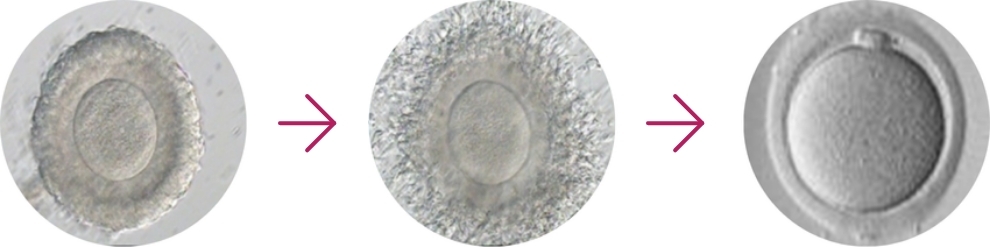
In vitro maturation (IVM) is a type of assisted reproductive technology (ART) like IVF; however, IVM requires very few, or sometimes no hormone injections at all. In IVM, eggs are collected from the ovaries while they are still immature and then matured in the laboratory ‘In Vitro’ over 24-30 hours. The immature eggs are then placed in specialised culture conditions designed to help support the egg through the final stages of maturation that are important for successful fertilisation and ongoing embryo development.
IVM is often recommended because it uses little or no hormones to stimulate follicles to grow in your ovaries. This makes the treatment less invasive, reduces the risk of ovarian hyperstimulation (OHSS) and is generally faster to proceed than standard IVF. IVM may be recommended for people who:
Depending on your prescribed treatment plan, you will have between 0-5 days of a very low dose of follicle stimulating hormone (FSH) with ultrasounds and blood tests to assess the number of follicles on your ovaries. When most of the follicles are measuring between 8-10mm in diameter, we will schedule your egg collection.
Immature eggs are collected from your ovaries through a process called trans vaginal oocyte pick up (TVOPU) by one of our specialty trained clinicians and identified by your embryologist. These eggs are then placed into a special culture medium for 24-30 hours to mature in the lab. The eggs are then checked for signs of maturation and either frozen or inseminated by intracytoplasmic sperm injection (ICSI) for further embryo culture. All embryos which develop to the blastocyst stage will be frozen for transfer in a subsequent cycle.
Overall, IVM has a slightly lower cumulative live birth rate compared to standard IVF, by about 10%. This means that your overall chance of having a baby from one IVM cycle including the fresh embryo transfer and all the usable embryos created, is slightly lower than standard IVF. This is because not all immature eggs will mature in the laboratory, and fewer embryos may be available for freezing. However, per embryo that is transferred in a frozen cycle, there is no difference in success rates.
The risks associated with IVM are similar to standard IVF; however, IVM eliminates the risk of ovarian hyperstimulation syndrome and as such, can be a very effective and safer alternative. ICSI is required for IVM, and ICSI is generally considered to be safe with no increased risk of birth defects, and the literature suggests the risks are like those of standard IVF. However, there may be an increased risk that any male offspring may experience similar male factor infertility issues later in life due to potentially inherited causes of underlying male factor infertility and not the process of ICSI itself. To date, reassuringly, there is no evidence of an increased risk of congenital (birth) or genetic disorders in children born following IVM nor any developmental disorders in early childhood or adolescence when compared with standard IVF treatment.
Please refer to the Concept Schedule of Fees for specific costs associated with IVM including ICSI treatment.
At Concept Fertility, we have experienced counsellors here to help you along your IVM journey. Our counsellors are there for you throughout your entire fertility treatment and will provide you with support and a listening ear.